Table of contents
- 1So What Is Day Boarding, Really?
- 2Sports: The Part Most Schools Get Wrong
- 3What Else Should You Actually Look For?
- 3.1Academics That Go Beyond Rote Learning
- 3.2Extracurricular Sports Programs That Are Actually Extracurricular
- 4Day Boarding Schools in Mumbai: Sports Facilities — Check Them Yourself
- 4.1Emotional Wellbeing — The Piece Nobody Advertises Enough
- 5Best Day Boarding Schools in Mumbai and Their Annual Fees
- 6Why More Mumbai Families Are Making This Switch
- 7A Few Honest Tips Before You Decide
- 8Closing Thoughts
That is exactly where day-boarding schools in Mumbai stand apart. Not because of fancy taglines, but because of what happens after the last bell rings. The structured evenings, the sport sessions, the clubs, the quiet study halls. It all adds up. And Mumbai, despite its space constraints and traffic chaos, has some genuinely impressive options for families looking beyond just marks and percentages.
So What Is Day Boarding, Really?
Think of it as the middle ground most Mumbai parents didn't know they needed. Your child attends school from early morning, stays through the afternoon for sports, activities, and supervised study, then comes back home in the evening. No hostel. No weeks of separation. Just a fuller, more purposeful school day.
For parents who work long hours – which, let's face it, is most of us in this city – it solves a real problem. Instead of your child coming home to an empty house or killing time with random screen time, they are engaged, supervised, and actually doing something meaningful. It is not a babysitting arrangement. It is structured growth.
Sports: The Part Most Schools Get Wrong
Here is something worth saying plainly: a lot of schools in Mumbai treat physical education as an afterthought. One period a week, dusty ground, and a teacher blowing a whistle. That is not sports training. That is barely physical activity.
The day boarding schools in Mumbai that are genuinely worth your attention take sports seriously. We are talking about real sports infrastructure — swimming pools that are actually maintained, full-size courts, proper athletics tracks, and indoor facilities for badminton, table tennis, and gymnastics. Not just checkboxes on a website.
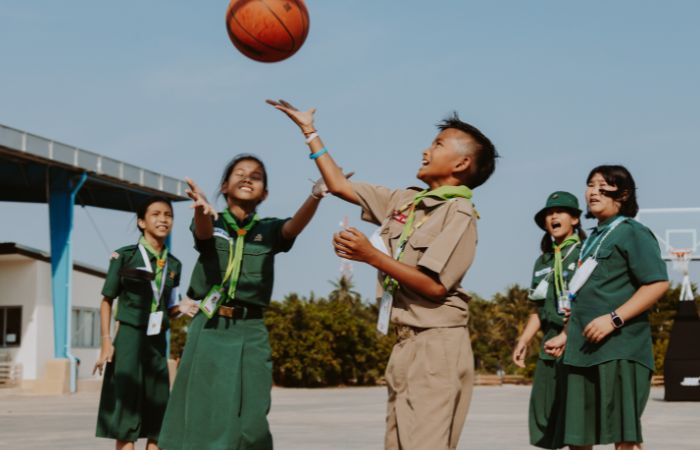
Day boarding schools in Mumbai sports programmes at the better institutions run daily. Students pick a sport — football, swimming, cricket, tennis, basketball, or martial arts — and train with coaches who actually know what they are doing. Over time, that athletic training builds more than physical fitness. It builds grit. Kids who train regularly tend to handle academic pressure better too. There is research behind that, but honestly, any parent who has watched their child come home tired and happy after a good practice session already knows it intuitively.
Inter-school tournaments add another layer. When your child competes against students from other schools, something shifts. They learn to lose gracefully and win without arrogance. They figure out what it means to represent something bigger than themselves. Some schools even offer sports scholarships for students who show exceptional talent — a recognition that athletic ability is as real and valuable as academic ability.
What Else Should You Actually Look For?
Academics That Go Beyond Rote Learning
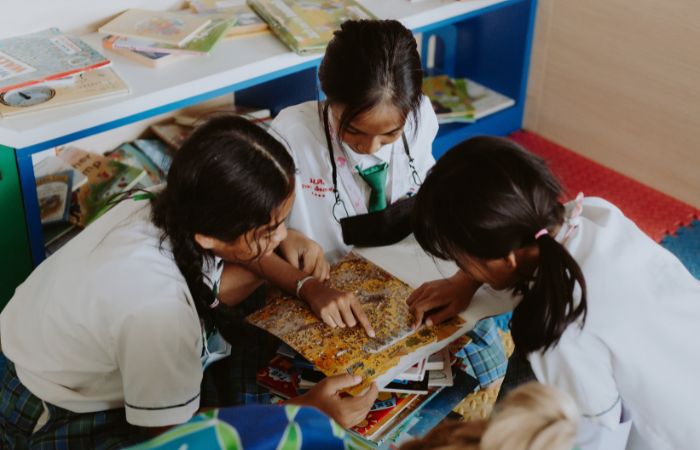
Board results matter, no question. But dig a little deeper. Ask how the school handles a child who is struggling. Ask whether teachers know their students by name or just by roll number. The best day-boarding schools in Mumbai blend academic structure with genuine curiosity — classrooms where questions are welcomed, not just answers.
Extracurricular Sports Programs That Are Actually Extracurricular
Some schools list ten activities on their website and offer two in practice. Visit the school on a weekday afternoon and see what is actually happening. Are kids on the field? Is the art room being used? Are there students in the debate club or the robotics lab? Extracurricular sports programmes and activity clubs should feel alive, not like decorations.
Day Boarding Schools in Mumbai: Sports Facilities — Check Them Yourself
Do not just take the admissions counsellor's word for it. Walk to the ground. Look at the pool. Check whether the basketball nets are torn. Day boarding schools in Mumbai's sports facilities can tell you a lot about how seriously a school invests in its students' physical development. A well-maintained facility says something. A neglected one says something too.
Emotional Wellbeing — The Piece Nobody Advertises Enough
A child spending ten to twelve hours in a school environment needs more than academic and physical support. They need to feel seen. The best schools have counsellors who are approachable, systems for catching early warning signs of stress or anxiety, and a culture where it is okay to not be okay sometimes. Ask about this directly when you visit. The answer — and the way the staff responds — will tell you a great deal.
Best Day Boarding Schools in Mumbai and Their Annual Fees
1. Sharad Pawar International School
Annual Fees: ₹160,000 – ₹270,000
Sharad Pawar International School is a CBSE co-educational boarding school in Kandivali West, Mumbai. The school focuses on academic excellence, modern infrastructure, sports facilities, and extracurricular activities while providing students with a disciplined residential learning environment.
2. Nahar International School
Annual Fees: ₹600,000 – ₹800,000
Nahar International School is a premium CIE day boarding school located in Andheri East. It is known for its international curriculum, smart classrooms, experienced faculty, leadership programmes, and strong emphasis on holistic student development.
3. Singapore International School
Annual Fees: ₹600,000 – ₹800,000
Singapore International School offers a world-class CIE curriculum with day-boarding facilities. The school provides modern learning resources, international teaching standards, advanced sports infrastructure, and diverse extracurricular opportunities.
4. Somaiya School, Mumbai
Annual Fees: ₹363,640 – ₹367,550
Somaiya School Mumbai is a CBSE day boarding school in Ghatkopar East. It offers quality academics, well-equipped laboratories, sports facilities, cultural activities, and a student-centric learning environment that promotes overall development.
5. New Era High School
Annual Fees: ₹330,200 – ₹511,520
New Era High School is a CBSE day boarding school situated in Bandra East. The school combines academic excellence with sports, leadership activities, and value-based education to prepare students for future success.
6. Hansraj Morarji Public School
Annual Fees: ₹100,000 – ₹176,000
Hansraj Morarji Public School is a boys' ICSE/ISC day boarding school in Andheri East. It provides a balanced education through strong academics, character development, sports, and co-curricular activities in a disciplined environment.
7. Sacred Heart Boys High School
Annual Fees: ₹93,720 – ₹121,275
Sacred Heart Boys High School is a boys' CIE day boarding school located in Santacruz East. The school emphasises academic learning, discipline, moral values, sports participation, and overall personality development.
8. Ascend International School
Annual Fees: ₹8,00,000 - ₹900,000
Ascend International School is Mumbai's popular international day-boarding school delivering globally approved curricula with inquiry-based teaching, leadership and innovation skills, sports, arts, and complete growth, with a progressive methodology of teaching.
Why More Mumbai Families Are Making This Switch
The shift has been real and noticeable. Five years ago, day boarding was something most parents associated with expensive international schools or kids whose parents travelled constantly. Today, it is mainstream — and for good reason.
Parents are waking up to the fact that tuitions after school are not the answer. Piling more academics onto an already full school day creates burnout, not success. What children actually need is variety — sports, creative outlets, social time with peers, and yes, some downtime too. Day boarding schools in Mumbai athletics and activity programmes provide exactly that kind of variety within a structure that still gets kids home before it is too late.
There is also a social development angle that often gets overlooked. Children in day-boarding environments spend more time with their peers across different contexts — not just sitting in class together, but playing, competing, creating, and sometimes disagreeing and working it out. That is real social learning. It cannot be replicated in a two-hour tuition class.
A Few Honest Tips Before You Decide
Here is what I would tell a friend who asked me about this:
Visit more than once: The first visit is always polished. Come back unannounced or ask for a regular school-day visit.
Talk to students, not just staff: A five-minute conversation with a Class 7 student will tell you more about school culture than an hour with the principal.
Match your child's personality: An introverted child who loves reading might need a school that balances sports with quieter creative outlets. A high-energy child might thrive somewhere with intensive day boarding schools in Mumbai sports training programmes.
Read the fine print on fees: Day boarding often adds to the base tuition. Know what is included — meals, transport, activity materials — before you commit.
Trust what you feel: Schools have an atmosphere. You will sense it. So will your child.
Closing Thoughts
Mumbai has always been a city of ambition. But ambition without balance tends to break people — and it can break children too, if we are not careful. The best day boarding schools in Mumbai understand this. They are not just academic factories. They are places where kids are pushed to grow in every direction — on the field, in the classroom, in front of an audience, and quietly in their own heads.
Finding that school takes effort. It means asking inconvenient questions, visiting at awkward times, and resisting the pressure to just go with the most popular name. But when you find the right fit — and you will — it makes every bit of that effort worth it.
Your child deserves a school that sees them fully. Not just the student — the whole person.
Frequently Asked Questions
1At what age or grade should a child start day boarding?
Children are not actually told an exact age for it, but it's aimed at kids who can participate in something lasting – typically after early primary school, when they're able to participate in extended activity without being overwhelmed. It is important to have a direct conversation with the school about the difference between how the day is occupied for younger compared to older pupils.
2What happens on days when a child doesn't want to do sports or isn't feeling well?
This wasn't covered, but it goes with the emotional wellbeing point: a school should have a flexible approach, and staff needs to be attuned to when the child isn't feeling well and take a different tack.
3How do I know if my child is actually thriving in a day-boarding setup versus just exhausted?
Be wary of tiredness and happiness versus actual weariness. The article rightly suggests one positive indicator is kids feeling good when they come home after a good practice session; the differentiator there, I think, is how feeling good feels over time.
4Is day boarding just a repackaged version of school plus tuition plus sports classes?
Well, no, says the article — it's all in one place, under one organised roof, with children participating in academics, sports and clubs with the same set of peers as opposed to having to learn through multiple disconnected pursuits and teachers.
5What red flags should parents watch for during a school visit?
An empty activity list on paper but not in real life, an unused art room, torn, used basketball nets, not maintaining pool, etc. It's the difference between what people advertise and what they're doing that you want to get.
Discussion
Comments (0)
Loading comments…

Written by
Aryan Dobhal
I am currently pursuing a BBA in Digital Marketing at Uttaranchal University. I have a strong interest in areas such as Search Engine Optimization (SEO), UI Designing (User Interface Designing) in Figma , Digital Marketing and Marketing, I am developing my knowledge in these domains .
Published July 3, 2026